Patient-Specific Mandibular Prosthesis for Osteosarcoma Reconstruction
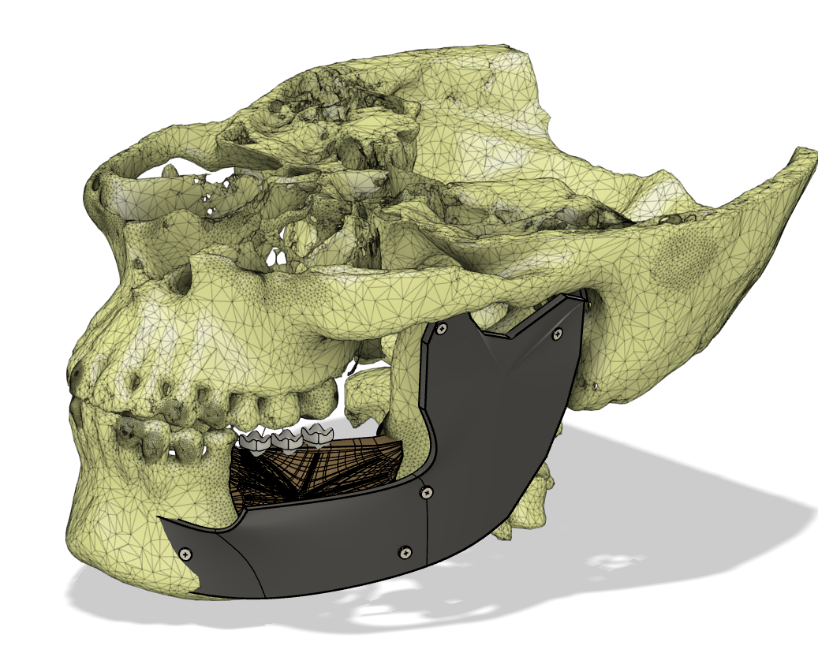
A custom jaw implant for a 23 year old cancer patient who cannot tolerate metal, using a plastic composite that behaves more like bone than titanium does.
Implant stiffness of 14 GPa against titanium's 110 GPa, closer to real bone
Group case study. I owned materials selection and the mechanical case.
- 14 GPa
- implant stiffness, near cortical bone
- 110 GPa
- titanium, roughly 8x stiffer
- Zero
- exposed metal surfaces
- 186 MPa
- ultimate strength, far above bite loads
Overview
This patient had bone cancer in the jaw and needed part of it removed. The standard fix is a titanium plate.
Titanium was ruled out. The patient reacts badly to metal, so an implant shedding even trace metal as it wears would inflame constantly and eventually fail. Every metal part of the usual solution had to be replaced, while still leaving a 23 year old with a normal face and a working jaw.
What I did
- Modelled the implant in 3D from the patient's CT scans as a carbon fibre reinforced PEEK plate following the original jaw line.
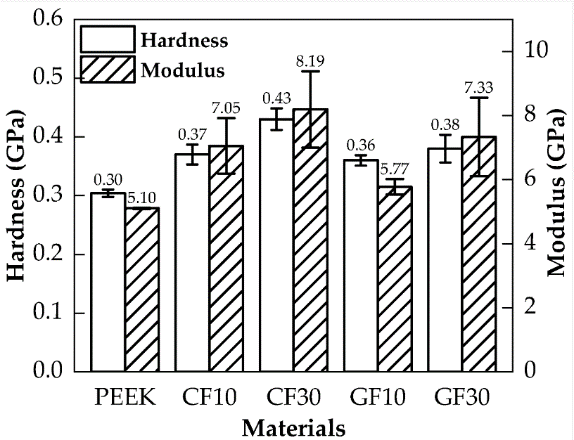
- Compared five grades of PEEK on modulus, strength, hardness, wear and creep, and set out why the chosen grade won.
- Matched stiffness to bone deliberately instead of maximising it, because an over stiff implant shields bone from load and the bone then resorbs.
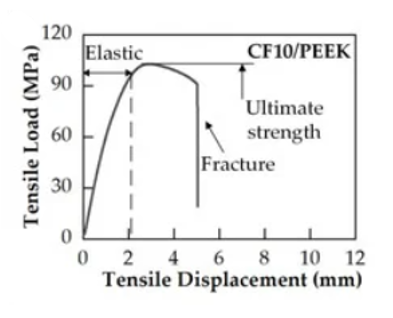
- Tested creep under sustained load at 37 °C, since a jaw sees decades of chewing cycles rather than one load to failure.
- Specified the biological interface and the manufacturing, cost and regulatory route so the design could actually be delivered.
Methods
- 3D modelling from patient CT scans
- Biocompatibility and metal sensitivity assessment
- Mechanical comparison of five PEEK and carbon fibre PEEK grades
- Creep and fatigue testing at body temperature under chewing loads
- Bioactive coating and autologous stem cell specification for osseointegration
- Design for manufacture, unit cost and regulatory pathway
Key results
- 01
Stiffness matches bone instead of overwhelming it. Carbon fibre PEEK sits at 14 GPa against titanium's 110 GPa, which is what drives the bone loss seen around conventional plates.
- 02
Strength is still well ahead of the load. Yield around 122 MPa, ultimate 186 MPa and fatigue strength 120 MPa, with bite forces far below all three.
- 03
Alternatives were ruled out on numbers. A phenolic carbon fibre composite at roughly 20 GPa was stiffer than needed and worse in flexure, so it lost to the 14 GPa grade.
- 04
No metal means no failure mode from a scratch. On a coated metal implant one scratch exposes the substrate. This releases no metal ions, and being radiolucent it keeps follow up scans for recurrence readable.
Outcome
The case ends with an implant that can be made and that solves the problem which ruled out standard treatment. It matches bone stiffness, contains no metal, encourages the patient's own bone to grow into it and keeps imaging clear. The trade offs are stated: it costs more than an off the shelf titanium plate and takes longer to produce.