Domestic Wastewater Management and Resource Recovery in India
A sewage treatment design for Indian cities and villages that runs on solar power where the grid is unreliable, and turns the waste into fertiliser instead of pollution.
Recovers up to 89% of the nitrogen and 95% of the phosphorus as fertiliser
Group design project. I led the filtration testing and the nutrient recovery case.
- 72,000 MLD
- national sewage load, 44% treated
- 89% / 95%
- nitrogen and phosphorus recovered
- Off grid
- solar powered filtration stage
- 2 versions
- wetlands rural, membranes urban
Overview
India produces more than 72 billion litres of household wastewater a day and treats under half. The rest reaches rivers and groundwater, causing disease, killing river life and damaging farmland, and city populations are still growing.
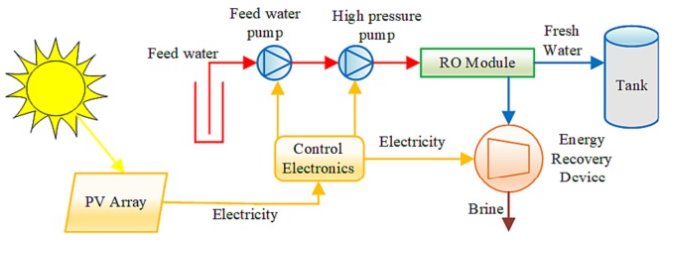
One design cannot serve a dense city and a scattered rural district, so the scheme keeps a shared core and swaps its final stage by site. It is built around two facts of Indian life: power cuts are common, and the warm climate suits biological treatment.
What I did
- Set out a three stage scheme: screening and grit removal, anaerobic then aerobic biological treatment, then a final polish that changes with the site.
- Split that final stage by context, using constructed wetlands rurally where land is available and skilled operators are not, and membrane filtration in cities.
- Chose an anaerobic first core so bacteria produce biogas instead of consuming aeration power, with aerobic polishing only on what remains.
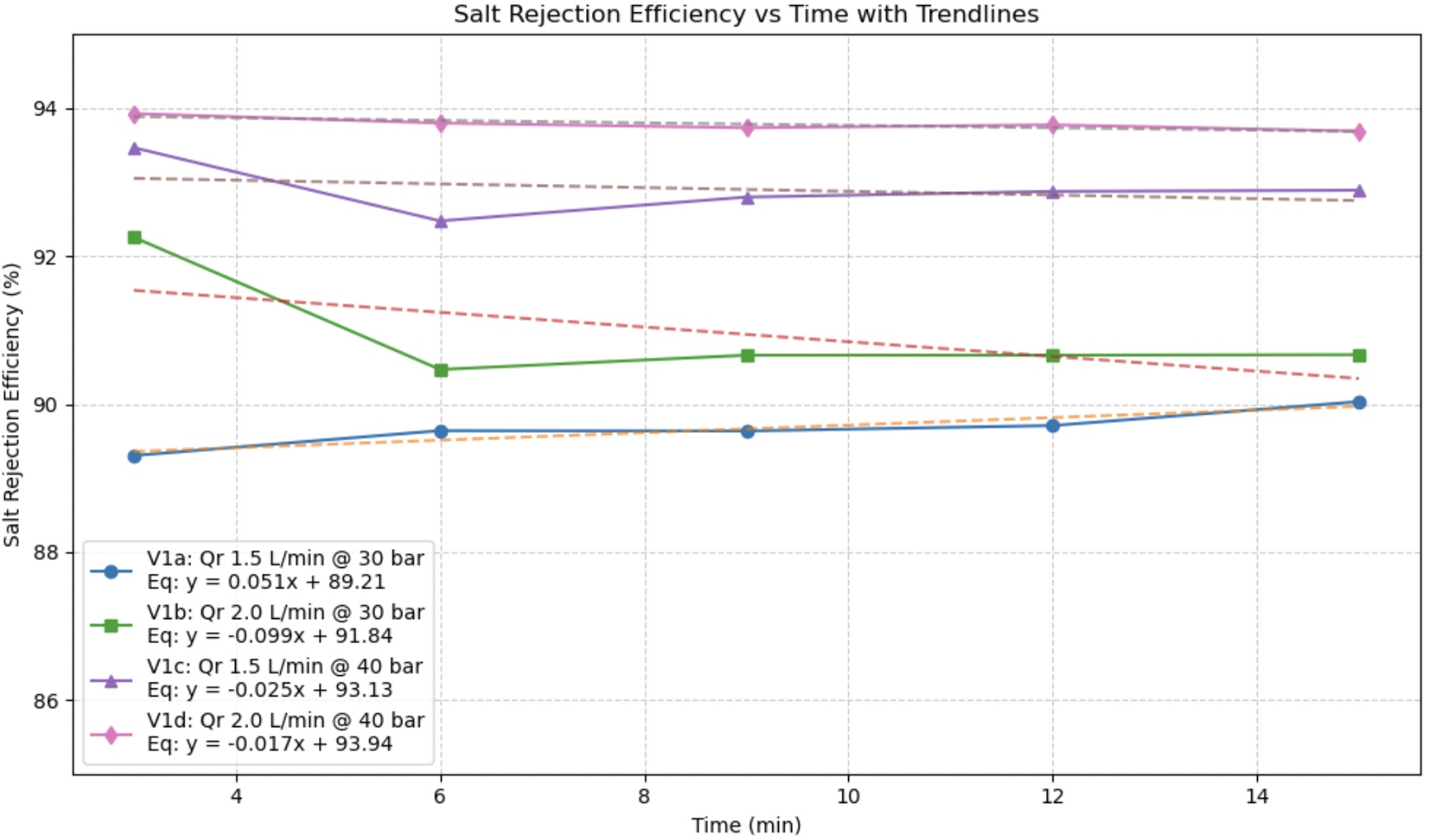
- Ran lab reverse osmosis tests at three pressures and two feed flows so pressure and hydraulics could be separated as causes of decline.
- Worked the struvite recovery chemistry and its payback against imported fertiliser, then benchmarked the scheme against plants already operating in India.
Methods
- Technology selection scored on energy, land, sludge, cost and operator skill
- Lab reverse osmosis testing across three pressures and two feed flow rates
- Solar photovoltaic powered filtration for off grid sites
- Struvite crystallisation with pH and magnesium to phosphate ratio controlled
- Benchmarking against a 400 MLD operating Indian installation
Key results
- 01
Fouling, not pressure, decides membrane life. Rejection fell in every run but held better at high pressure, and the worst case was high pressure with high feed flow, which points squarely at surface fouling.
- 02
That makes feed hydraulics the first thing to tune. Useful directly to anyone specifying this kit or writing its cleaning schedule, rather than simply uprating the pump.
- 03
Nutrient recovery is high enough to be worth doing. Struvite recovery reached 89% of nitrogen and 95% of phosphorus at a magnesium to phosphate ratio of 1.5 to 1, holding near 90% phosphorus around pH 8.3.
- 04
It substitutes for something the country imports. India buys in roughly 380,000 tonnes of phosphate fertiliser, about 4% of total fertiliser imports, so recovered struvite has an existing market.
Outcome
The result is a treatment scheme that fits the country it was designed for. Solar keeps it running through outages, the biological core suits the climate and produces gas rather than consuming electricity, and nutrient recovery turns a disposal cost into something farmers buy. The limits are stated too: real sewage varies far more than synthetic lab feed, and a short test cannot show long term fouling.